
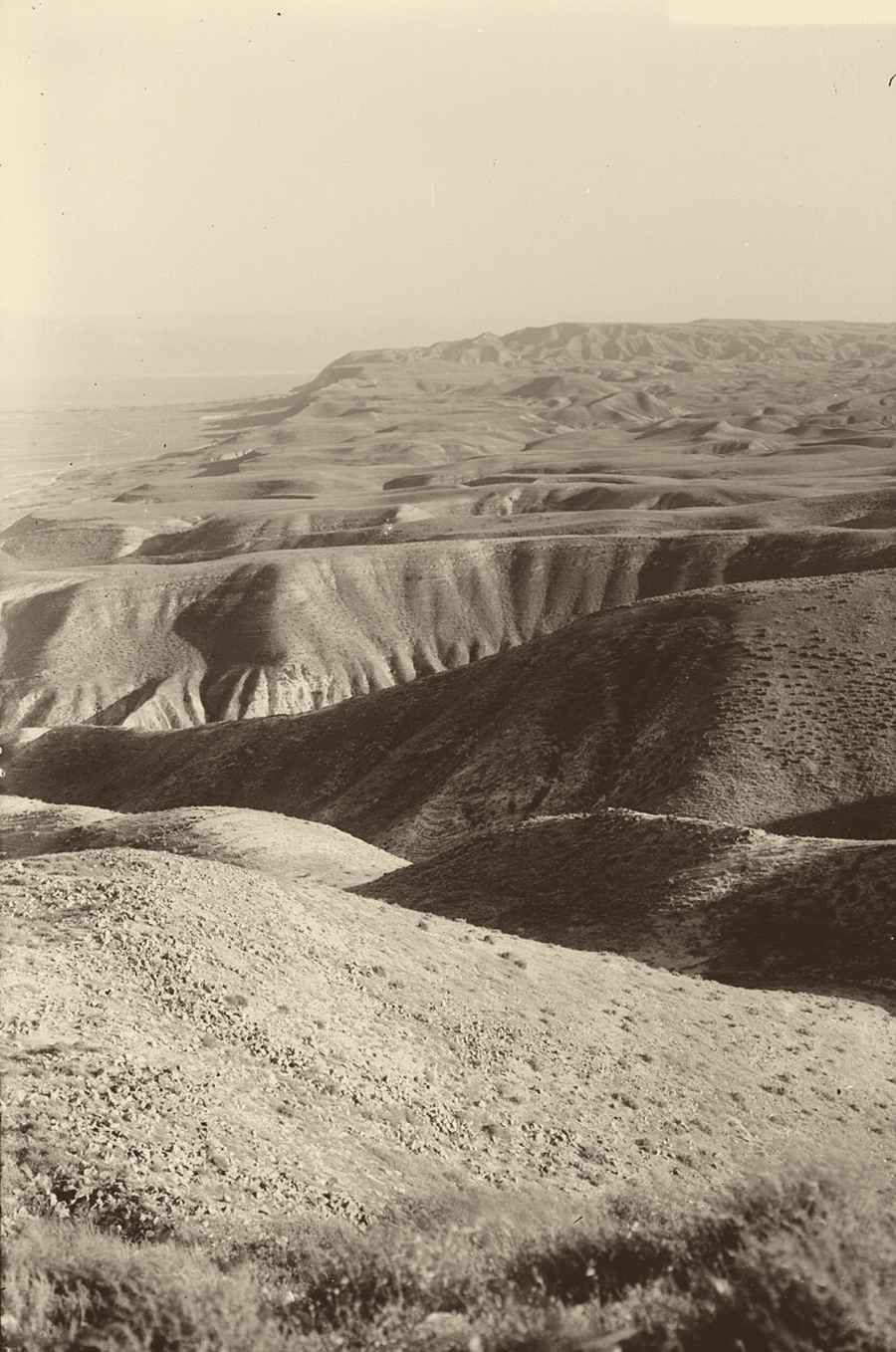
It begins with a fire going out on a hilltop near Lachish, and a single sentence at the start of the Torah. From Rashi's question about the first verse to Abraham, the Temple, the fall of Jerusalem to Babylon and the return under Cyrus: what the Torah says, what the stones show, where historians disagree, and how the other side sees it.
Discuss this episodeWatch on YouTube
Historians disagree
What did “we cannot see Azekah” mean?
Lachish Letter 4, c. 589–586 BCE: “We are watching for the signals of Lachish … for we cannot see Azekah.”
The common readingAzekah had already fallen to Babylon, and its signal had gone dark.
The other readingAzekah simply wasn’t visible from the writer’s post, or no signal was expected that night.
Historians disagree
How big was the kingdom of David and Solomon?
The “low chronology”Finkelstein and Silberman argue a real state came later, in the 9th century; the united monarchy was small or legendary.
Against itMazar and the Khirbet Qeiyafa excavators point to a fortified site radiocarbon-dated to about 1020–980 BCE.
Two calendars
When was the First Temple destroyed?
Conventional history587 or 586 BCE, from Babylonian records.
Traditional Jewish chronologyAbout 423/422 BCE (Seder Olam), some 160 years later.
In this episode
- Lachish, c. 588 BCE: the last signal fire
- Rashi’s question about the Torah’s first verse
- The promise to Abraham
- What the stones say: Merneptah, Mesha, Tel Dan
- The Temple and the empires
- The fall of Jerusalem
- By the rivers of Babylon, and the return
- The Other Chair
Transcript
The full transcript is published here on release day.
Ask about this episode
Sources
What it’s built on
Each claim in the script carries one of these numbers. The tag says what kind of evidence it is: documented, disputed, what the Torah says, or the Other Chair’s position.
“…we are watching for the signals of Lachish, according to all the indications which my lord hath given, for we cannot see Azekah.”
Lachish Letter 4, c. 588 BCE · tr. W. F. Albright
- documentedLachish Letter 4 (Lachish ostracon 4), excavated 1935 by J. L. Starkey at Tell ed-Duweir (Lachish); translation after H. Torczyner, Lachish I: The Lachish Letters (1938), and S. Aḥituv, Echoes from the Past (2008), pp. 70–74. Date: the final Babylonian campaign, c. 589–586 BCE. DRAMATISED: the watch post, the fire, the night and the writer's location are scene-setting; the narration says 'we don't know exactly where he stood'.
- documented / interpretationFire signals: the letter's word is mś't, 'signals' (cf. Jeremiah 6:1, 'set up a signal on Beth-haccherem'); reading them as fire beacons between hilltops is the standard interpretation, not stated in the letter.
- documentedYaush named as addressee in Lachish Letters 2, 3 and 6.
- disputed'We cannot see Azekah': many scholars read it as Azekah having fallen (its signal gone out); others argue it only means Azekah was not visible from the writer's post, or that no signal was expected. The narration says 'many scholars read it the simple way'.
- Tanakh says / documentedJeremiah 34:7 (JPS 1917, lightly modernised). Lachish letters found 1935 (18 ostraca) and 1938 (3 more), about 21 in all, in the destruction layer of the city gate complex (documented).
- documentedLachish Level II destroyed in the Babylonian campaign, c. 588/586 BCE (D. Ussishkin, The Renewed Archaeological Excavations at Lachish 1973–1994, 2004); Jerusalem and the Temple burned, 2 Kings 25:8–9. Exact order of Lachish vs. Jerusalem not stated ('so would Jerusalem').
- Torah saysGenesis 1:1 (JPS 1917).
- documented (Rashi/ Torah tradition) Rashi on Genesis 1:1, quoting Rabbi Yitzchak (source: Midrash Tanchuma (Buber) Bereshit 11; Yalkut Shimoni, Bo 187). Rashi = R. Shlomo Yitzchaki, Troyes, 1040–1105. 'Probably the most widely studied' commentary is the common scholarly description, not a measured statistic. Translation lightly adapted from standard English renderings.
- Torah saysGenesis 11:31 (Ur of the Chaldees, Haran); 12:1; 12:6 ('the Canaanite was then in the land'); 12:7; 17:8 (JPS 1917). 'Unto the land' = JPS 1917 rendering of el ha'aretz in 12:1, the source of the show's name.
- Torah saysGenesis 23 (Sarah dies at Kiriath-arba/Hebron; the cave of Machpelah bought from Ephron the Hittite for 400 shekels of silver, before the people at the city gate).
- Torah traditionBereshit Rabbah 79:7 (R. Yudan bar Simon: three places the nations cannot say were stolen: Machpelah (Gen 23), Joseph's tomb / the field at Shechem (Gen 33:19), the Temple site (2 Samuel 24:24; 1 Chronicles 21:25)).
- Torah saysExodus narrative (Gen 37–50; Exodus 1–20); Leviticus 25:23; Leviticus 19:34 (JPS 1917).
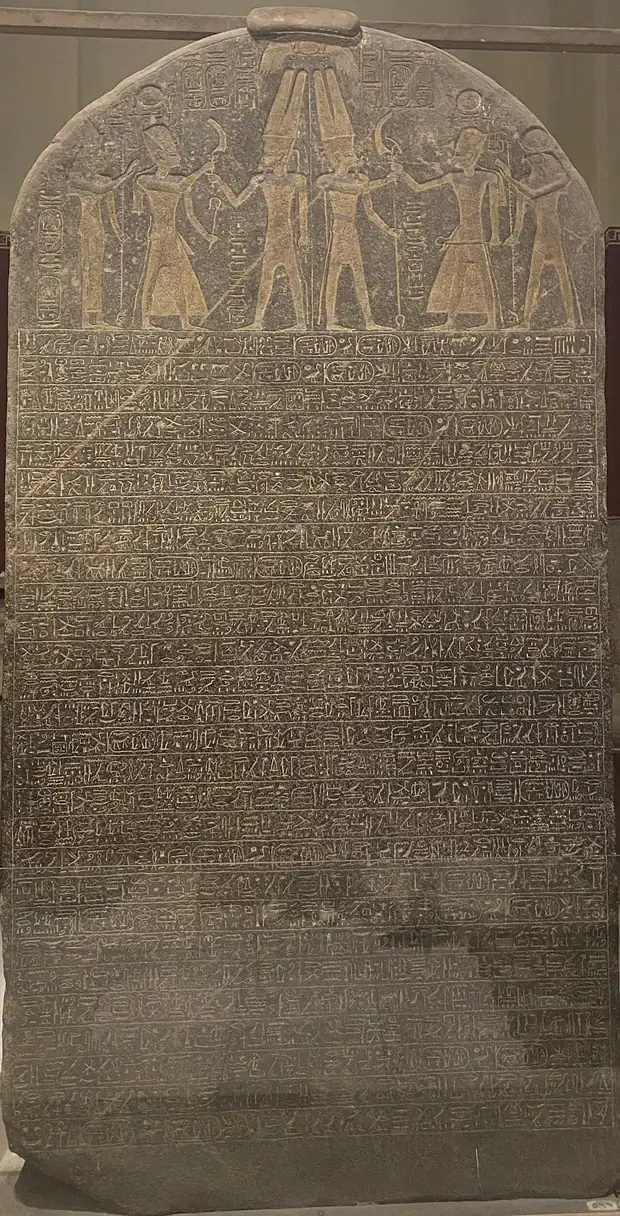
- documentedMerneptah Stele (Cairo, Egyptian Museum JE 31408), black granite, found by W. M. Flinders Petrie at Thebes (Merneptah's funerary temple), 1896; Merneptah's year 5, c. 1208 BCE; 'Israel is laid waste, his seed is not' (line 27). Translation: M. Lichtheim, Ancient Egyptian Literature II (1976).
- documented / disputed detailDeterminative: 'Israel' is written with the sign for a people (throw-stick + man and woman), whereas Ashkelon, Gezer and Yenoam carry the sign for a city-state/foreign land (standard reading; e.g. K. A. Kitchen, On the Reliability of the Old Testament, 2003). 'Oldest widely accepted' because a proposed earlier reading (Berlin pedestal ÄM 21687; M. Görg, P. van der Veen, C. Theis, 2010) is disputed.
- documentedMesha Stele (Louvre AO 5066), found at Dhiban 1868, c. 840 BCE; names Omri king of Israel.
- documented (reading largely accepted)Tel Dan Stele (Israel Museum), fragments found 1993–94 by A. Biran; 9th c. BCE, Aramaic; 'House of David' (bytdwd); the reading is accepted by most scholars.
- disputedI. Finkelstein & N. A. Silberman, The Bible Unearthed (2001) (low chronology); A. Mazar, 'Archaeology and the Biblical Narrative: The Case of the United Monarchy' (2010); Y. Garfinkel, S. Ganor & M. Hasel, Khirbet Qeiyafa excavations 2007–2013, radiocarbon c. 1020–980 BCE. Kingdom of Israel in the 9th c. (Mesha, Kurkh Monolith of Shalmaneser III, 853 BCE: 'Ahab the Israelite'); Judah a full state by the 8th c. at the latest (documented consensus).
- Tanakh says1 Kings 6:1 (480 years after the Exodus).
- Jewish law/practiceFacing Jerusalem/the Temple in prayer: 1 Kings 8:44–48; Babylonian Talmud Berakhot 30a; Shulchan Aruch, Orach Chaim 94:1.
- documentedFall of Samaria, 722/720 BCE: annals of Sargon II (and Shalmaneser V); 2 Kings 17:6.
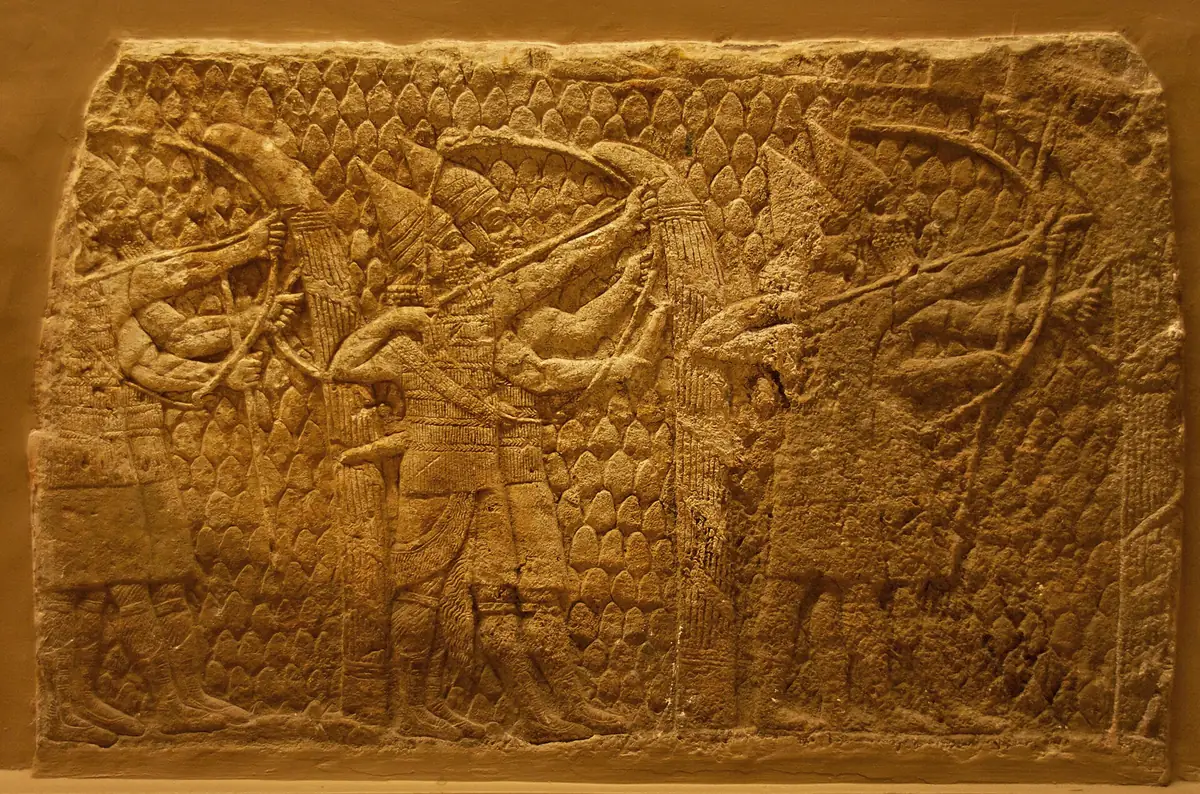
- documentedSennacherib's 701 BCE campaign: Sennacherib Prism (Taylor Prism, British Museum; Oriental Institute Prism, Chicago): 'Himself, like a bird in a cage, I shut up in Jerusalem, his royal city' and Hezekiah's tribute of 30 talents of gold and 800 talents of silver (tr. D. D. Luckenbill, The Annals of Sennacherib, 1924); Lachish reliefs from the South-West Palace, Nineveh, British Museum.
- Tanakh says2 Kings 18:13–16 (Hezekiah pays 300 talents of silver and 30 talents of gold); 2 Kings 19:35–36 (the Assyrian camp struck in one night; Sennacherib returns to Nineveh). The gold figure agrees with the prism; the silver figures differ (300 vs 800).
- documentedBabylonian Chronicle ABC 5 (British Museum BM 21946), reverse lines 11–13: Nebuchadnezzar's 7th year, 2 Adar = 15/16 March 597 BCE, 'seized the city of Judah and captured the king'.
- Tanakh says2 Kings 24:8–16 (Jehoiachin aged 18; deportation of officers, warriors and craftsmen: 10,000 in v. 14; 7,000 + 1,000 in v. 16).
- documentedBabylonian ration tablets from Nebuchadnezzar's Southern Palace (the 'Weidner tablets', Berlin VAT 16378 etc., c. 592 BCE; E. F. Weidner, 1939): oil rations for 'Ya'ukinu, king of the land of Yahudu' and his five sons.
- Tanakh says2 Kings 24:17–25:10; Jeremiah 52:4–14 (Zedekiah's rebellion, siege, famine, breach, burning in the fifth month by Nebuzaradan).
- Jewish traditionMishnah Ta'anit 4:6 (the ninth of Av); the biblical texts give the 7th (2 Kings 25:8) and 10th (Jeremiah 52:12); BT Ta'anit 29a reconciles them.
- disputedConventional date 587 or 586 BCE (e.g. O. Lipschits, The Fall and Rise of Jerusalem, 2005); traditional Jewish chronology, Seder Olam Rabbah ch. 25–30: year 3338 from creation ≈ 423/422 BCE (a difference of ~163–165 years).
- Tanakh saysPsalm 137:1, 5–6 (JPS 1917).
- customReciting Psalm 137:5–6 before breaking the glass at many (especially Ashkenazi) weddings is custom, not law; the duty to remember Jerusalem at a wedding: Shulchan Aruch, Orach Chaim 560:2 (Rema).
- documentedL. E. Pearce & C. Wunsch, Documents of Judean Exiles and West Semites in Babylonia in the Collection of David Sofer (2014): 103 texts; with related collections about 200 tablets; Al-Yahudu ('town of Judah') and neighbouring settlements; dated 572–477 BCE; many Yahwistic names.
- Tanakh saysJeremiah 29:5–7, 29:10 (JPS 1917).
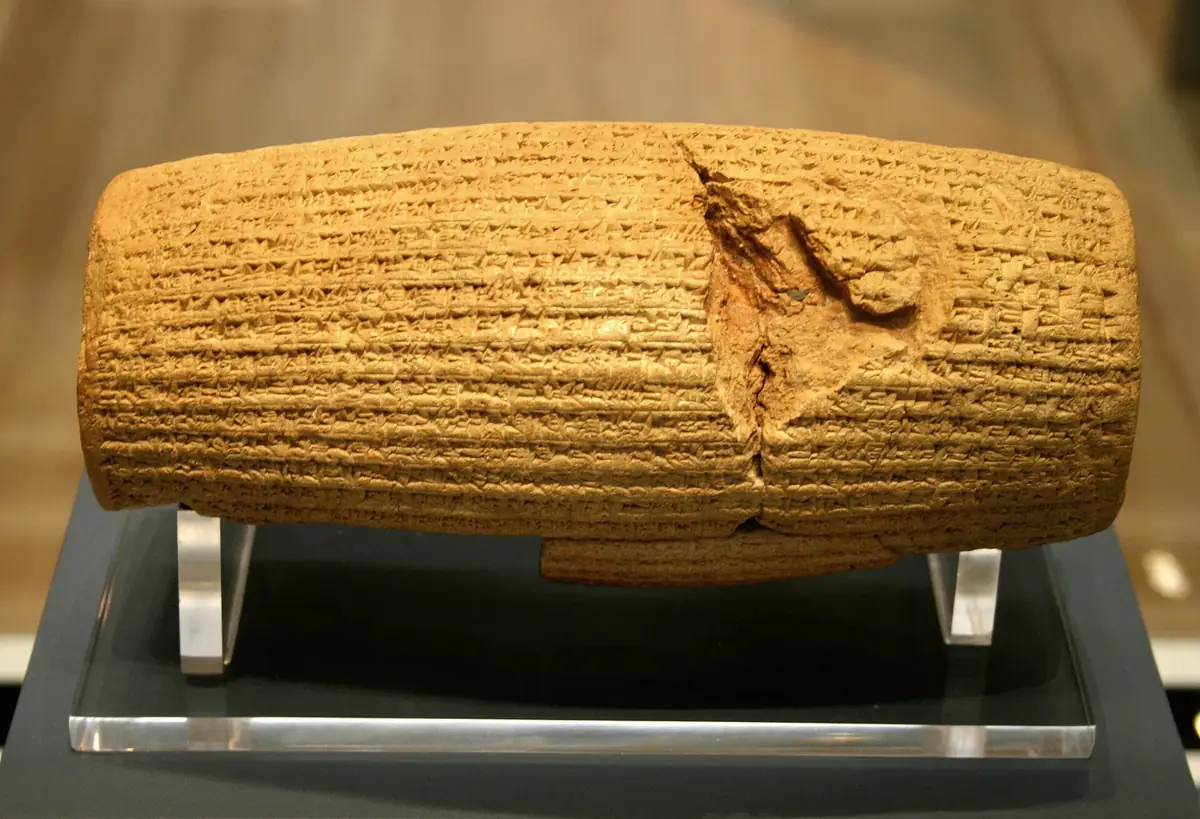
- documentedCyrus takes Babylon, October 539 BCE: Nabonidus Chronicle (ABC 7); Cyrus Cylinder (British Museum, found by H. Rassam, 1879), which speaks of returning gods and peoples to their homes and does not name Judah.
- Tanakh says (date conventional)Ezra 1:1–4 (decree of Cyrus); Ezra 2:64 (42,360 returnees); Ezra 6:15 (Temple completed 3 Adar, 6th year of Darius ≈ March 515 BCE; often given as 516).
- Other Chair (scholarly position)T. L. Thompson, The Historicity of the Patriarchal Narratives (1974); N. P. Lemche, The Israelites in History and Tradition (1998).
- Other Chair (scholarly position)K. W. Whitelam, The Invention of Ancient Israel: The Silencing of Palestinian History (1996).
- Other Chair (summarised position)Palestinian continuity argument, summarised; see e.g. N. Masalha, Palestine: A Four Thousand Year History (2018).
- Other Chair (summarised positions)Christian readings: fulfilment/supersessionist readings vs. Christian Zionist (many evangelical) readings; summarised.
- Other Chair (text + summarised position)Quran 5:21 ('O my people, enter the Holy Land which God has ordained for you'); commentators differ on whether and how it applies today (summarised).
- documentedSecond Temple destroyed 70 CE; State of Israel 1948: about 1,878 years ('close to nineteen centuries'). First exile 586 → 516/515 BCE ≈ 70 years Temple to Temple.
- liturgy'Next year in Jerusalem': close of the Passover Haggadah and of Ne'ilah on Yom Kippur; daily Amidah blessing 'who returns His presence to Zion'; Psalm 137 at weddings (see 30).
- documented / generalPhilistia: Babylonian Chronicle ABC 5 (Nebuchadnezzar takes Ashkelon, 604 BCE) and the end of Philistine material culture after it; Moab and Ammon: Josephus, Antiquities 10.181–182 (Nebuchadnezzar's campaign, 582 BCE), absent as kingdoms thereafter; Edom: its people (Idumeans) absorbed into Judea under John Hyrcanus, c. 125 BCE (Josephus, Antiquities 13.257). 'Faded from history as nations within a few centuries' is a general summary.
- Tanakh/history + documentedAntiochus IV's desecration of the Temple, 167 BCE, and the Maccabean revolt and rededication, 164 BCE (1 Maccabees 1–4); Herod's rebuilding begun c. 20/19 BCE (Josephus, Antiquities 15.380) and finished c. 63 CE (Antiquities 20.219); BT Bava Batra 4a ('whoever has not seen Herod's building has never seen a beautiful building'); destruction 70 CE (Josephus, Jewish War 6).